
Causes of Septal Perforation
Septal perforations develop through multiple mechanisms that compromise the blood supply of the nasal septum. Previous nasal surgery remains one of the most common causes, particularly when bilateral mucoperichondrial injury occurs during septoplasty or rhinoplasty.
Chronic trauma from excessive nose picking, nasal cauterization, prolonged use of intranasal vasoconstrictor sprays, cocaine use, inflammatory autoimmune disorders, infections, and occupational chemical exposure may also contribute to tissue necrosis. In some patients, systemic diseases such as granulomatosis with polyangiitis or other vasculitic disorders should be excluded before reconstructive surgery is considered.
Identifying and eliminating the underlying cause is an essential step because ongoing tissue injury significantly reduces the likelihood of durable surgical success.
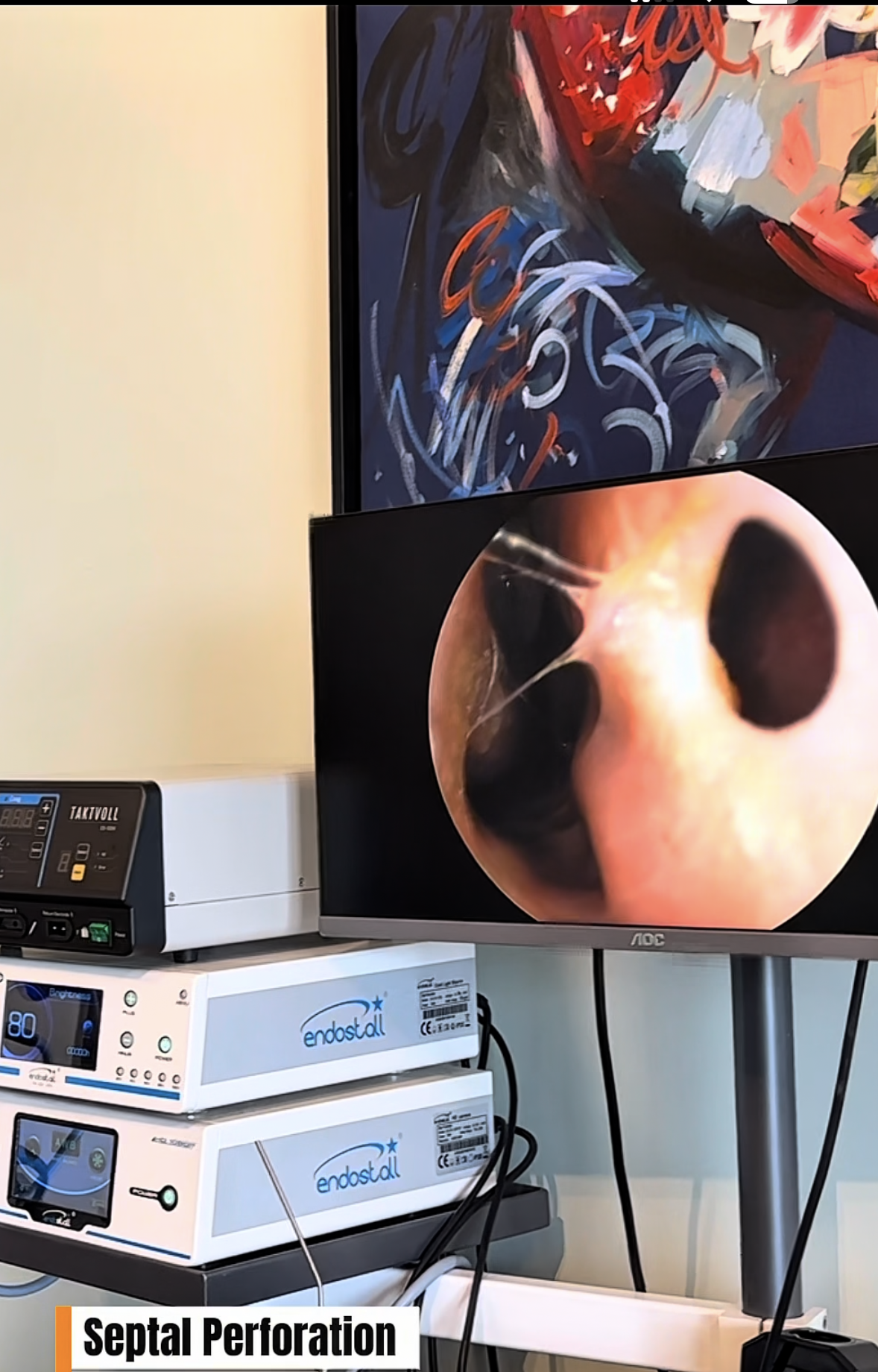
Anterior Ethmoidal Artery Based Nasal Mucosal Flap: Advanced Endoscopic Closed Technique and Long Term Outcomes
Septal perforation is a challenging condition characterized by a defect within the nasal septum that creates an abnormal communication between the two nasal cavities. Patients may experience nasal obstruction, crusting, recurrent bleeding, dryness, whistling during breathing, unpleasant odor, and progressive deterioration of nasal airflow. While some small perforations remain asymptomatic, many become increasingly symptomatic over time because of disturbed nasal airflow and chronic mucosal inflammation. The management of septal perforations requires a comprehensive understanding of nasal anatomy, mucosal physiology, and reconstructive principles. Successful treatment depends not only on closing the defect but also on restoring healthy, well vascularized nasal lining capable of long term healing.
Why Septal Perforation Repair Is One of the Most Challenging Procedures in Rhinologic Surgery
Septal perforation repair is widely recognized as one of the most technically demanding operations in rhinologic surgery. The surgeon must reconstruct two separate mucosal surfaces while preserving delicate vascular supply within a confined anatomical space. Scar tissue from previous operations frequently limits tissue mobility and decreases the quality of local mucosa available for reconstruction. Excessive tension on the repair, inadequate vascularity, persistent inflammation, or postoperative trauma may all result in wound breakdown and recurrence. Even in experienced hands, septal perforation surgery remains a technically demanding procedure that requires meticulous surgical planning, refined microsurgical technique, and strict patient compliance during postoperative recovery.
Endoscopic Closed Septal Perforation Repair with Anterior Ethmoidal Artery Based Nasal Mucosal Flap
Among modern reconstructive techniques, the anterior ethmoidal artery based nasal mucosal flap represents one of the most advanced and reliable options for repairing selected septal perforations. This highly vascularized flap provides robust blood supply that promotes predictable healing while minimizing tension across the reconstructed area. Dr. Erdal Erkoç performs this procedure entirely through an endoscopic closed approach without making any external skin incision or opening the nose. The high definition endoscopic visualization allows meticulous flap elevation, precise dissection, and accurate placement of the vascularized tissue over the septal defect while preserving surrounding healthy structures. The absence of external incisions reduces additional surgical trauma and allows patients to benefit from a minimally invasive reconstructive procedure with excellent visualization throughout the operation.
Why the Anterior Ethmoidal Artery Based Flap Is Considered One of the Most Effective Reconstruction Methods
The success of septal perforation repair depends primarily on maintaining a robust blood supply throughout the healing process. The anterior ethmoidal artery based flap preserves excellent vascularity, allowing healthy mucosal tissue to survive while supporting rapid revascularization of the reconstructed septum. Unlike free grafts that rely entirely on secondary vascular ingrowth, vascularized mucosal flaps maintain continuous perfusion immediately after transfer. This biological advantage reduces tissue necrosis, improves mucosal integration, decreases postoperative crusting, and increases the probability of long term closure. For carefully selected patients with appropriate perforation characteristics, this technique has become one of the preferred reconstructive options among surgeons specializing in advanced endoscopic nasal surgery.
High Success Rates for Septal Perforations Around One Centimeter
Patient selection remains one of the most important predictors of successful septal perforation repair. In appropriately selected patients with septal perforations measuring approximately one centimeter, endoscopic reconstruction using an anterior ethmoidal artery based nasal mucosal flap can achieve near complete closure rates when performed with meticulous surgical technique. The favorable outcomes are largely attributable to excellent flap vascularity, careful preservation of healthy surrounding mucosa, and tension free reconstruction. Although individual anatomical variations, previous surgeries, and tissue quality always influence results, smaller perforations generally offer a substantially higher likelihood of complete healing than larger defects. Comprehensive preoperative assessment allows the surgeon to determine whether this advanced reconstructive method represents the most suitable option for each individual patient.
Surgical Technique and Principles of Reconstruction
The operation begins with careful endoscopic assessment of the perforation margins and surrounding mucosa. Scar tissue is meticulously released to restore tissue mobility while preserving as much healthy vascularized mucosa as possible. The anterior ethmoidal artery based mucosal flap is then elevated with precise attention to maintaining its vascular pedicle before being rotated to cover the perforation without excessive tension. Additional supportive graft materials may be used when necessary to reinforce structural stability depending on the characteristics of the individual defect. Every stage of the procedure is performed under high definition endoscopic visualization, allowing accurate tissue handling while minimizing unnecessary trauma to adjacent nasal structures.
Recurrence Remains a Significant Risk
Despite significant advances in reconstructive techniques, recurrence continues to represent one of the greatest challenges following septal perforation repair. Even technically flawless surgery cannot completely eliminate the possibility of reperforation because healing depends on numerous biological and patient related factors. Poor vascularity, excessive postoperative crusting, infection, repeated nasal trauma, inadequate humidification, and compromised wound healing may all contribute to surgical failure. Previous nasal operations, chronic inflammation, autoimmune diseases, and compromised tissue quality further increase the complexity of reconstruction. For this reason, patients should understand that septal perforation surgery is a demanding reconstructive procedure with inherent risks despite modern surgical advances and careful operative planning.
Smoking, Vaping, Electronic Cigarettes, Alcohol, and Recreational Drug Use Can Compromise Surgical Success
Successful healing after septal perforation repair depends heavily on preservation of microvascular circulation during the postoperative period. Cigarette smoking produces vasoconstriction, reduces tissue oxygenation, delays epithelial regeneration, and impairs collagen synthesis, all of which significantly compromise wound healing. Vaping and electronic cigarettes are not safe alternatives because nicotine and other inhaled chemicals also impair microcirculation and damage the regenerating nasal mucosa. Excessive alcohol consumption and recreational drug use further interfere with normal tissue repair by increasing inflammation, impairing immune function, and reducing patient compliance with postoperative care. Continued use of cigarettes, vaping products, electronic cigarettes, alcohol abuse, or recreational drugs after surgery dramatically increases the likelihood of repair failure and recurrent septal perforation, making complete avoidance of these substances an essential component of successful recovery.
Postoperative Care Is as Important as the Operation Itself
The postoperative period plays an equally important role in determining long term surgical success. Patients should maintain meticulous nasal hygiene using saline irrigations and moisturizing treatments exactly as instructed by their surgeon to minimize crust formation and promote healthy mucosal regeneration. Direct nasal trauma, forceful nose blowing, heavy physical exertion, and unnecessary manipulation of the healing septum should be avoided throughout the recovery period. Scheduled postoperative endoscopic examinations allow early identification of crusting, localized inflammation, or compromised healing before these issues progress into more significant complications. Strict adherence to postoperative recommendations substantially improves the probability of durable closure and long term restoration of normal nasal function.
Why Experience Matters in Septal Perforation Surgery
Septal perforation reconstruction should ideally be performed by surgeons with extensive experience in advanced endoscopic nasal surgery and complex septal reconstruction. The procedure requires not only technical precision but also comprehensive understanding of intranasal vascular anatomy, flap design, wound healing, and management of revision cases. Dr. Erdal Erkoç utilizes advanced endoscopic techniques together with anterior ethmoidal artery based vascularized nasal mucosal flaps to achieve highly successful reconstruction of carefully selected septal perforations measuring approximately one centimeter through a completely closed approach without external incisions. Careful patient selection, meticulous surgical execution, and comprehensive postoperative follow up collectively contribute to maximizing long term functional outcomes. Although no reconstructive technique can completely eliminate the possibility of recurrence, modern vascularized flap reconstruction performed by experienced surgeons offers one of the most reliable solutions currently available for appropriately selected patients with symptomatic septal perforations.
