

In short
- The most common cause is previous surgery in which too much septal cartilage was removed without leaving enough support. Trauma and some autoimmune diseases can also lead to it.
- Surgery does more than hide the depression: it rebuilds the nose’s support framework, starting with the septum.
- In severely collapsed noses, rib cartilage is often the only source that can provide enough support.
- The nose is about 80% healed at 12 months, and full healing is complete at 24 months at the earliest. Your follow-up plan is set at the examination.
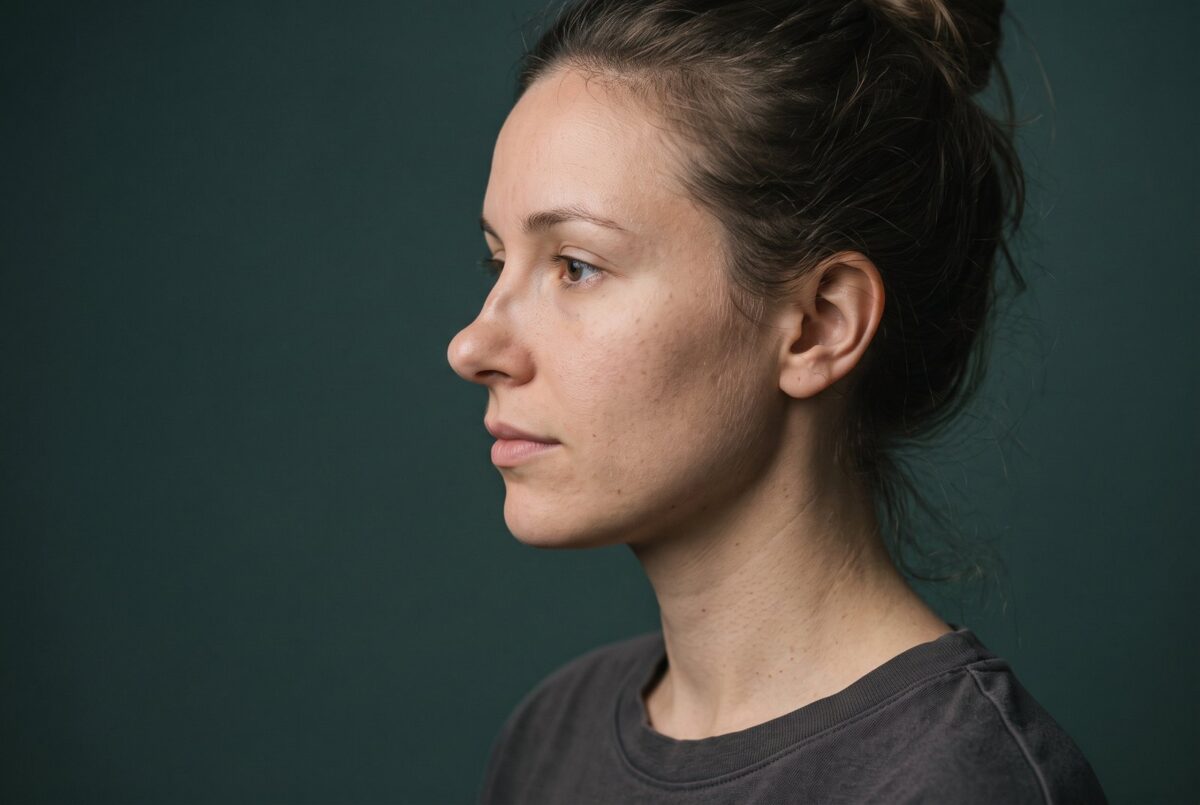
Saddle nose deformity, commonly described as a collapsed nasal bridge, is the loss of structural support along the bridge of the nose. A distinct depression develops in the bridge; this may be accompanied by varying degrees of shortening of the nose and downward rotation of the nasal tip. In mild cases, only the cartilaginous part of the bridge is affected, while advanced collapse may extend to the nasal bones and septal framework.
Causes of a Collapsed Nasal Bridge
Numerous conditions may contribute to saddle nose deformity.
| Cause | Details |
|---|---|
| Previous nasal surgery | Previous nasal surgery remains one of the most common causes, particularly when excessive septal cartilage has been removed during rhinoplasty or septoplasty without preserving adequate structural support. |
| Trauma | Traumatic injury represents another frequent cause. Nasal fractures involving the septum may heal improperly or produce progressive cartilage necrosis, ultimately leading to collapse months or even years after the initial injury. |
| Autoimmune disease, infection and other tissue loss | Certain autoimmune disorders including granulomatosis with polyangiitis and relapsing polychondritis may gradually destroy the cartilaginous framework through chronic inflammation. Severe infections, septal abscess formation, previous cocaine use, congenital abnormalities, and failed reconstructive procedures may also result in significant structural loss requiring complex reconstruction. |
Regardless of the underlying cause, the surgical objective remains the same. The surgeon must rebuild the structural framework of the nose rather than merely camouflage the depression.
Examination and Assessment Before Surgery
Accurate diagnosis begins with a comprehensive clinical assessment. The external examination evaluates dorsal depression, tip projection, nasal length, symmetry, skin quality, scar formation, and facial proportions. Equally important is the internal examination, which assesses septal integrity, residual cartilage availability, airway obstruction, turbinate hypertrophy, internal valve collapse, and mucosal condition.
Modern imaging techniques such as computed tomography may be useful in selected patients, particularly following severe trauma or previous reconstructive surgery. However, surgical planning relies primarily upon meticulous physical examination and detailed understanding of the three dimensional structural deficiencies.
The surgeon must identify which components require reconstruction and determine whether sufficient septal or auricular cartilage remains available. In advanced deformities, rib cartilage frequently represents the only material capable of restoring adequate structural support.
When is rib cartilage used?
Rib cartilage may be considered for reconstruction when the existing cartilage support in the nose is insufficient. The graft source is selected according to the examination findings.
Rib Cartilage Harvesting
Rib cartilage is harvested through an incision in the chest area. The location of the incision and the scar are discussed before surgery.
Only a portion of the cartilage is removed while preserving the surrounding structural stability of the chest wall. Modern surgical techniques emphasize meticulous tissue handling to minimize discomfort, accelerate healing, and reduce visible scarring.
Following harvest, the cartilage undergoes careful preparation. Internal stresses within the cartilage are balanced through specialized carving techniques that reduce the likelihood of postoperative warping.
The donor site is then closed in multiple anatomical layers to optimize cosmetic healing and minimize postoperative discomfort.
 Read nextRib Graft Harvesting in Revision NosejobsWhat harvesting rib cartilage feels like, and whether it leaves a scar or changes the chest.→

Rebuilding the Nasal Support Framework
Modern saddle nose correction is fundamentally a structural operation rather than a cosmetic augmentation procedure.
The first priority is restoration of septal support through placement of a strong central graft that recreates the load bearing function of the native septum. This reconstructed septum serves as the foundation upon which the remainder of the nasal framework is rebuilt.
Grafts prepared for the nasal bridge, septum and tip are used in an attempt to rebuild support; the condition of the airway is also assessed in the surgical plan.
Recovery After Saddle Nose Repair
Recovery following rib graft rhinoplasty requires patience because the operation involves comprehensive reconstruction rather than isolated cosmetic refinement.
By month 12, the nose is approximately 80% healed; full healing is complete at month 24 at the earliest. Your individual follow-up plan for saddle nose repair is determined during the consultation.
Long term follow up remains an essential component of successful reconstruction, allowing careful monitoring of graft stability, airway function, and aesthetic maturation.
Possible Risks and Complications
As with all complex reconstructive procedures, saddle nose repair carries potential risks. These include infection, bleeding, prolonged swelling, graft warping, partial graft resorption, asymmetry, scar formation, persistent nasal obstruction, and the possible need for revision surgery.
Assessment in Istanbul
During your consultation with Op. Dr. Erdal Erkoç at EE Clinic, you can discuss your previous operations and breathing difficulties. Operations take place at Medipol Acıbadem Regional Hospital.
Written and reviewed by Op. Dr. Erdal Erkoç, ENT surgeon · Last reviewed: